Furnace trouble, one phone call
HVAC Rescue Pros is not a heating contractor. We are a call-connection service: when you call (813) 471-5413, you are connected with an independent local heating company that serves your ZIP code. The call costs you nothing.
The pro you speak with asks what the furnace is doing and agrees pricing and timing with you directly. There is no obligation to book.
Signs your furnace needs repair
- No heat, even though the thermostat is calling for it
- Air from the vents feels cool or barely warm
- The furnace runs a few minutes, then shuts off (short cycling)
- Bangs, squeals or grinding
- Water on the floor around the furnace
- A blinking light on the control board or an error on the thermostat
- Soot near the furnace or a carbon monoxide alarm
A dusty smell on the first cold day is normal. A smell of hot plastic or rotten eggs (gas) is not: see safety below.
Furnace symptoms at a glance
The right column lists what you can safely check yourself before you call.
| Symptom | Common causes | What you can safely check |
|---|---|---|
| Nothing happens at all | No power, thermostat, door safety switch, control board | Thermostat on HEAT and above room temperature, batteries, breaker, furnace power switch, door panel seated |
| Small fan runs, burners never light | Pressure switch, blocked vent, failed ignitor, clogged condensate trap | Outside vent pipes not buried in snow; note any blink code |
| Burners light, then go out within seconds | Dirty flame sensor, poor ground, gas supply | Count the blinks through the small window in the furnace door, if there is one |
| Blowing cold air | Fan set to ON, lockout, overheating, ignition failure | Fan on AUTO, clean air filter |
| Shuts off after a few minutes | Clogged filter, limit switch, closed vents, flame sensor | Filter, registers open |
| Little air at the vents | Blower motor or capacitor, dirty blower wheel, ducts | Filter, vents not blocked by furniture |
| Water around the furnace | Clogged condensate trap or line, failed condensate pump | Look at the drain hose and pump for leaks |
| Bang at startup, squeal or grinding | Delayed ignition, worn motor bearings | Nothing. Turn the furnace off and call |
The parts that usually fail, in plain words
A gas furnace runs the same sequence every time: inducer fan, ignitor, gas valve, flame check, blower. If one step fails, the furnace stops and often flashes a code.
Ignitor or pilot
Newer furnaces use a hot surface ignitor that glows orange to light the gas. It is brittle and cracks with age. Older furnaces use a pilot flame, which can go out when the thermocouple wears.
Flame sensor
A thin metal rod in the flame that tells the control board the burners lit. Coated with residue, it can't detect the flame, so the board shuts the gas off after a few seconds.
Inducer motor and pressure switch
The inducer is the small fan that starts first and pushes exhaust out the vent. The pressure switch confirms that draft. A blocked vent, a cracked hose or a worn inducer stops everything here.
Limit switch
A safety switch that shuts the burners off if the furnace overheats, usually because of poor airflow: a clogged filter, closed vents or a weak blower. The cause needs fixing. The switch must never be bypassed.
Blower motor and capacitor
The blower moves air through your ducts. Many blower motors rely on a capacitor to start and run. A weak capacitor leaves the motor humming without spinning. Worn bearings squeal or grind.
Control board and error codes
The board runs the sequence. When something fails, a small light blinks a pattern, and the code chart is usually on the furnace door. Count the blinks before switching the power off, since that often clears the code.
Condensate trap and drain
High-efficiency furnaces (the ones with white plastic vent pipes) make water. It drains through a trap, a hose and often a small pump. A clog or frozen line backs water up, and the furnace shuts down.
Heat exchanger
The metal chamber that keeps flame and exhaust separate from the air you breathe. Years of heating and cooling can crack it, and a crack can let carbon monoxide into the airflow. A pro who finds one will usually shut the furnace down.
Electric furnaces heat with large electric elements switched on in stages. A burned-out element or failed relay usually means lukewarm air. A breaker that trips again after one reset needs a pro.
What happens on a repair visit
- Questions first. The technician asks what you noticed and whether you saw a code.
- Watch the sequence. They run the furnace and see which step fails.
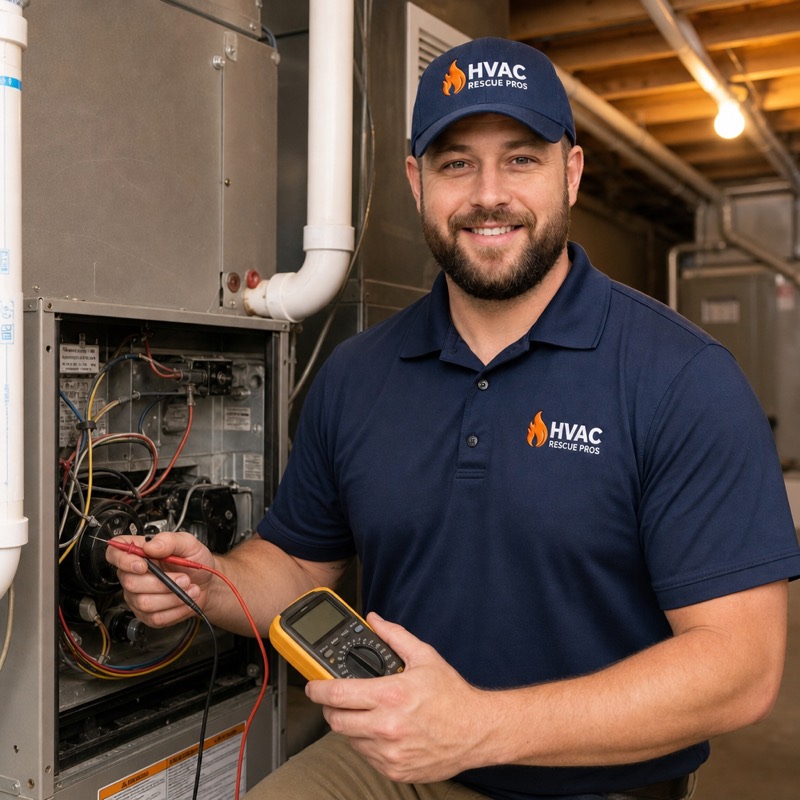
- Test, not guess. Expect meter readings on switches, sensors and capacitors, plus a look at venting, gas pressure and the filter.
- Explain and quote. You hear what failed and what the repair involves before work starts. You decide.
- Repair and retest. A full heating cycle confirms the furnace lights, stays lit and shuts off normally.
Small parts are often on the truck; boards and motors may need ordering. Big repair on an older unit? Read repair or replace your furnace.
What to ask before a company comes out
- When can a technician come, and will they call ahead?
- How do you charge for the visit? Is there a diagnostic fee?
- Do you work on furnaces like mine (gas or electric, make and age)?
- Will I get a price before any repair starts?
- Can you share your license number and proof of insurance?
Furnace safety
- Do not open the burner compartment, touch the gas valve or work on wiring.
- Do not keep pressing reset buttons or bypass a safety switch.
- Do not restart a furnace that bangs at startup or leaves soot.
- Keep a working carbon monoxide alarm on every level and near bedrooms.
While you wait, close curtains and doors. Give a space heater clear space, plug it into a wall outlet and never leave it unattended. To protect pipes in a cold house, let faucets drip. More in the no-heat checklist and emergency heating repair.